PANORAMA INTERNACIONAL


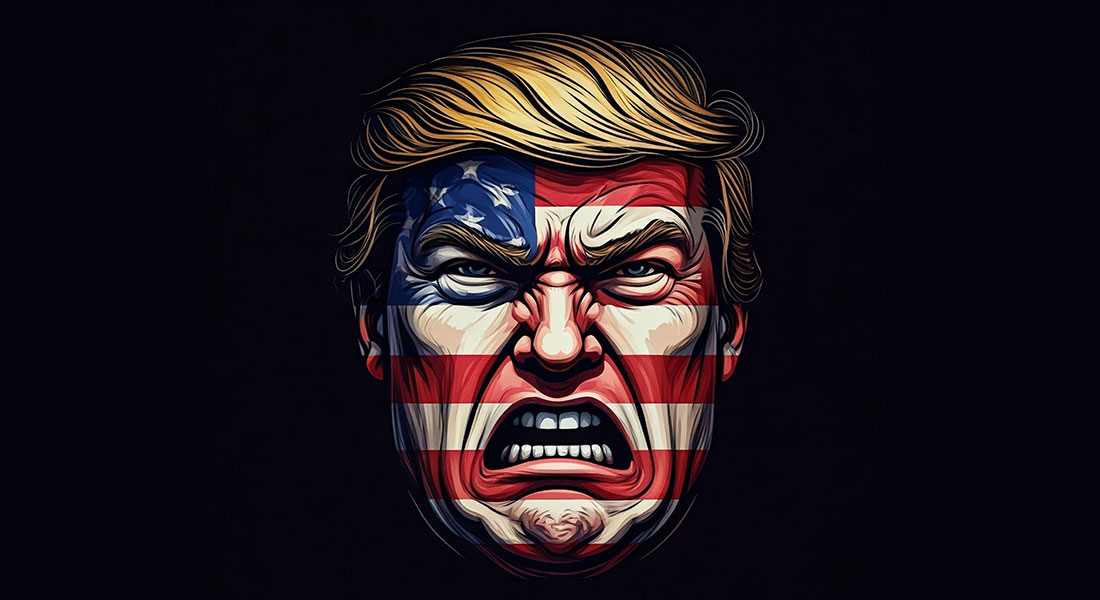
The prospect of President Trump pursuing a third term has sparked intense debate across the United States. While the Twenty-Second Amendment of the constitution clearly limits presidents to two elected terms, the speculation surrounding Trump’s political ambitions continues to fuel controversy and division. Some supporters argue that his influence, policies, and claims of unfair treatment justify extension of his time in office. In contrast, critics argue that any attempt to violate constitutional norms threatens the foundations of American democracy. The key obstacle to Trump serving a third term is constitutional law. Passed after Franklin D. Roosevelt was elected four times, the Twenty-Second Amendment—ratified in 1951—was designed to prevent any one individual from holding the presidency for too long. It states that no person may be elected president more than twice, a safeguard meant to preserve democratic rotation and prevent the accumulation of excessive executive power. As a result, even if Trump or his supporters were to call for another term, the Constitution clearly forbids it unless the amendment were repealed or radically reinterpreted.
Despite this, Trump has repeatedly hinted—sometimes jokingly, sometimes more seriously—at defying the two-term limit. He has questioned the legitimacy of past elections and claimed he deserves additional time in office due to what he describes as political persecution or election interference. These arguments resonate with a segment of his base, who see Trump as a symbol of resistance against a perceived corrupt establishment. For these supporters, the idea of Trump serving beyond two terms represents a fight for justice and the restoration of what they view as true American values. Critics argue that such rhetoric is dangerous, even if it’s not acted upon. American democracy depends on respect for institutional norms and peaceful transitions of power. When a leader challenges constitutional safeguards, it undermines trust in the system. History provides numerous examples of figureheads who began by questioning limits and ultimately eroded democratic freedoms. For many Americans, preserving constitutional boundaries is more important than any single leader’s agenda, no matter how popular or polarizing. Politically, talk of a third Trump term highlights the nation’s deep cultural and ideological divide. Supporters view him as a populist disruptor whose policies on immigration, the economy, and national security should continue without interruption, arguing that his bold leadership is needed in an increasingly unstable world. Opponents contend that his approach is too divisive and that extending his influence would further erode national unity and democratic norms. As a result, the third-term debate has become a symbol of broader struggles over America's future identity. The issue of precedent continues to raise concerns. If Trump or any president was able to bypass term limits, it could permanently shift the balance of power in the U.S. The presidency holds significant authority over foreign policy and the military, which can reshape society. Allowing one individual to retain that power for extended periods raises the risk of authoritarianism. The nation’s founders feared this possibility, which is why presidents traditionally followed George Washington’s example of stepping down after two terms. The system was designed to ensure regular leadership changes through the democratic process. Despite this, Trump’s continued popularity with a sizable portion of the electorate keeps the debate alive. His supporters argue that term limits should be reconsidered if a leader has overwhelming public backing. Legally, this would require a constitutional amendment approved by two-thirds of Congress and ratified by three-fourths of the states—a process unlikely in today’s polarized climate. Nonetheless, the enthusiasm for the idea highlights Trump’s deep influence on Republican politics and his impact on Americans' views of executive power. Discussions of a third term reflect a redefinition of democracy in the 21st century. Many citizens feel disconnected from political institutions, distrust the media, and are frustrated by economic inequalities. Leaders like Trump capitalize on these grievances, presenting themselves as capable of confronting corruption. When people feel unrepresented, they may be more open to radical changes that weaken democratic protections.
The controversy over a hypothetical third term for President Trump highlights the fragility of democracy in the U.S. and the need for citizens to remain vigilant in its defense.